

Comment 45 - Operational Onboarding: The Great Overlooked Factor

When we talk about Human Resources, most conversations revolve around recruitment, selection, and even company culture. However, there is a critical stage that many organizations still neglect in practice: operational onboarding.
And no, this is not about the typical induction session with a corporate video and a handbook no one reads again. This is about the real process of integrating a person into their role… especially in operational positions.
Because this is where many companies lose money, productivity, and most importantly, people.
Hiring well… but integrating poorly
You can run an excellent recruitment process, find the ideal candidate, and successfully hire them. But if on their first day:
No one is expecting them
They don’t have the necessary tools
They don’t clearly know what to do
Their supervisor is too busy
The team isn’t aware of their arrival
…that “great hire” probably won’t last long.
In operational roles, this becomes even more critical. The learning curve is usually short, but the impact of poor onboarding is immediate.
Onboarding is not an event, it’s a process
One of the most common mistakes is thinking onboarding is limited to day one.
In reality, it should be a structured process that can last weeks (or even months), ensuring that the employee:
Clearly understands their role
Knows the performance standards
Receives practical training (not just theoretical)
Has close follow-up
Feels part of the team
In many cases, what actually happens is: “Here’s your position, observe and learn.”
And then we wonder why turnover happens.
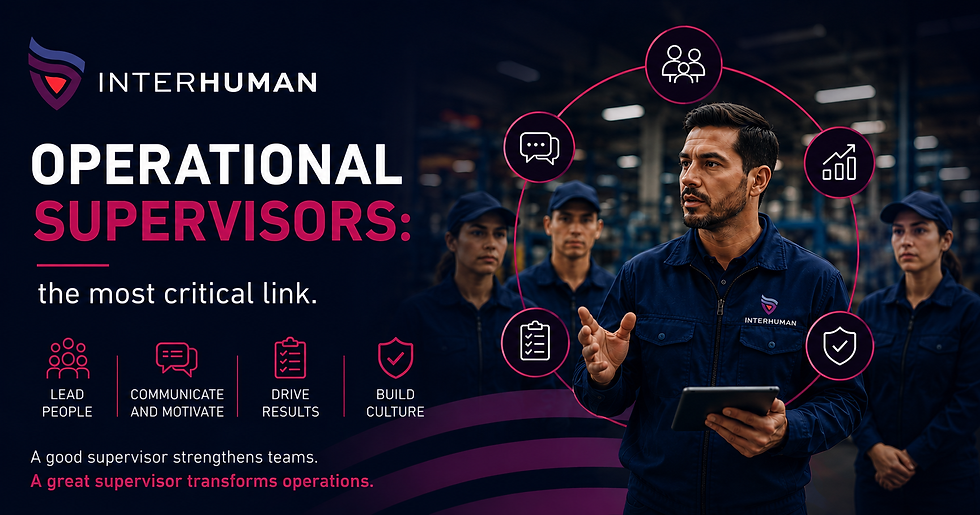
The supervisor is key (and often unprepared)
Another important point: operational onboarding doesn’t depend on HR… it depends on the business unit.
HR can design the process, but the person who truly integrates the employee is their direct supervisor.
And here’s where another common issue appears: technically strong supervisors who lack people development skills.
The result:
Incomplete explanations
Lack of follow-up
Unclear expectations
Frustration on both sides
We invest heavily in attracting talent… but very little in teaching leaders how to develop it.
The hidden cost of poor onboarding
A bad onboarding process doesn’t always show immediate impact in metrics… but it shows up in:
Early turnover (first 30–90 days)
Operational errors
Low productivity
Workplace accidents
Poor team dynamics
And the most expensive part: having to restart the hiring process.
When operational onboarding is done right
Companies that do this well usually have something in common:
Clear processes from day one
Integration checklists
Structured training
Real supervisor involvement
Early adaptation evaluations
It’s not about sophistication… it’s about operational discipline.
Final thought
In many organizations, operational onboarding remains “the great overlooked factor.”
We focus on attracting talent, but not on making it succeed within the company.
And the reality is simple:it’s not just about hiring well…it’s about integrating better.
Because in the end, a person’s success in their role doesn’t depend only on their profile… but on how the company receives, guides, and develops them from day one.
Manuel Gonzalez


Comments