

COMMENT 40 – Why Operational Recruiting Fails in Mexico

In Mexico, one of the most common —and least understood— challenges within Human Resources is operational recruiting.
It’s not that there are no candidates.It’s not that “people don’t want to work.”
The issue runs deeper:Most companies are recruiting the wrong way.
And this has a direct impact on:
Turnover
Productivity
Costs
Operational stability
Mistake #1: Recruiting without understanding the operation
Many companies design job openings from a desk, not from the shop floor.
Generic roles are posted such as:
“General operator”
“Helper”
“Production worker”
But in reality, each position has:
A specific work pace
Physical demands
Type of supervision
Pressure levels
When this isn’t clearly defined, the employee joins… and quickly leaves.
Mistake #2: Believing salary solves everything
Yes, compensation matters.But in operational roles, it’s not the only factor —and often not the most important.
Other key factors include:
Distance and transportation
Shift schedules (especially night shifts)
Work environment
Supervisor treatment
Perceived stability
Many companies increase wages… but fail to improve the conditions.Result: turnover continues.
Mistake #3: Slow recruiting processes
Operational talent moves fast.
A typical hiring process in Mexico can take:
3 to 7 days for initial response
1 to 2 weeks to hire
By then, the candidate has already accepted another offer.
In operations, speed is critical:
Same-day response
Immediate interview
Hiring within 24–48 hours
Mistake #4: Not measuring what truly matters
Many HR departments still track:
Number of interviews
Number of hires
But fail to measure:
Retention at 7, 15, and 30 days
Cost per filled vacancy
Effectiveness by recruiting source
Without data, the same problem repeats itself.
Mistake #5: Disconnection between HR and operations
This is probably the most critical issue.
HR recruits…but operations doesn’t validate.
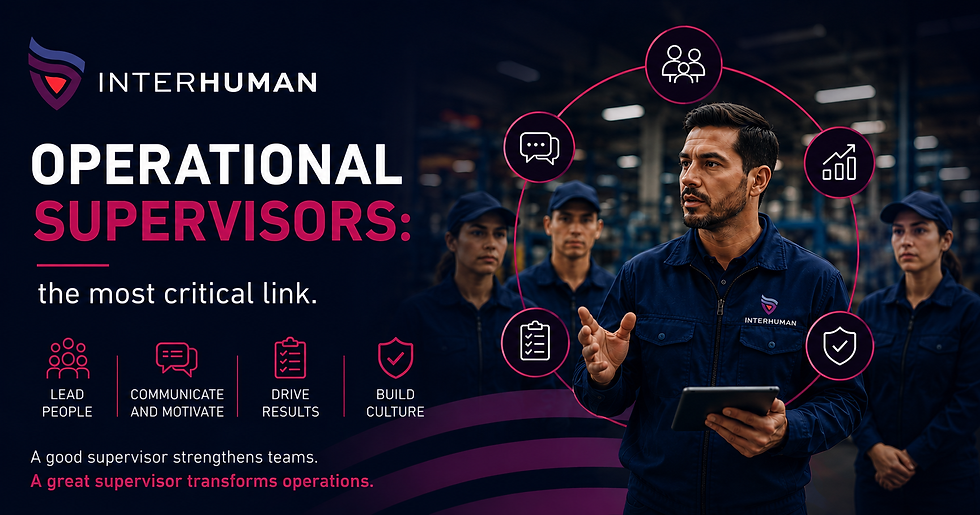
Supervisors:
Are not involved in defining profiles
Don’t provide feedback
Don’t participate in retention
The result: poorly selected and poorly integrated employees.

So, what actually works?
Companies that achieve operational stability do five things right:
Define roles based on real operational needs
Recruit quickly with simple processes
Align salary with real working conditions
Measure retention, not just hiring
Involve supervisors from the beginning
Final reflection
Operational recruiting is not an administrative task.It is a strategic function.
Because at the end of the day, it’s not about filling vacancies…it’s about keeping your operation running.
And that starts with how you recruit.
Manuel Gonzalez


Comments